Every business that wants to use AI in 2026 discovers, in the second week of the project, that the AI part is the easy part. The hard part is the layer underneath: where the data lives, whether anyone trusts it, whether it can be joined across systems, and whether the joins are still right tomorrow.
Data engineering is the discipline that decides whether the AI feature ships or quietly fails. It is also the discipline that gets least credit, because when it works the result is a number on a dashboard that nobody questions. When it does not work, the number is wrong, the AI is downstream, and the dashboard lies politely.
This article is about the work of building data pipelines, warehouses, and analytics layers that hold up under AI-shaped load, and how AI itself is changing that work.
Why this matters now
AI made bad data more expensive
An AI feature inherits every flaw in the data underneath it, and amplifies them.
Before AI, a bad data pipeline produced a wrong dashboard, which someone occasionally noticed. After AI, a bad data pipeline produces wrong AI outputs at scale, which compound, drift, and are difficult to trace back to a missing join in a stale ETL job written in 2023.
The economic effect is that data quality moved from a back-office concern to a product feature. The marginal cost of unreliable data went up, because the things downstream of unreliable data (recommendations, scoring, valuations, automation) are more visible to the customer and more expensive to roll back.
Teams that take this seriously start by reducing the surface area: fewer sources, fewer pipelines, fewer copies, better lineage. Teams that do not, ship AI features on top of a data layer they could not explain to an auditor, and then spend the next year debugging the symptoms.
What the discipline actually covers
Pipelines, warehouses, and the parts that decide
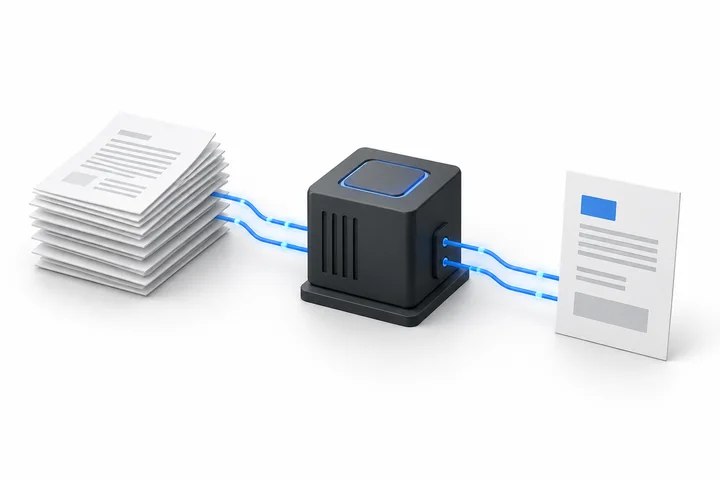
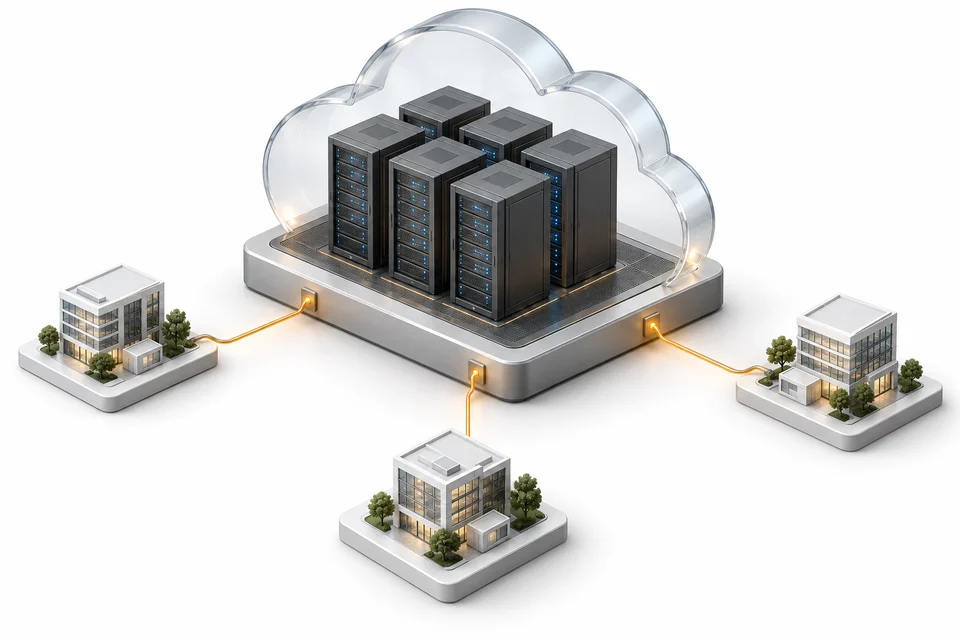
Data engineering in 2026 sits across four layers. Ingestion: capturing events, snapshots, and change-data-capture streams from product databases, third-party APIs, and operational tools. Storage: a warehouse (Snowflake, BigQuery, or self-hosted Postgres for smaller scales) that can answer analytical queries without competing with the operational database. Transformation: a layer (dbt, SQLMesh) that turns raw events into trusted business concepts, versioned and tested. And serving: dashboards, APIs, and the feature store that backs AI models.
What separates a credible data layer from an accumulated mess is a small set of habits. Every transformation is code, reviewed and tested. Every table has an owner, a freshness expectation, and a contract its consumers can rely on. Every join is documented well enough that someone joining the team can answer the question of what the number means.
These are not exotic practices. They are the operational defaults that decide whether the AI team can ship without paranoia.
Where the wins land
Three high-leverage moves on every data engagement
Across the data engagements sDEN has shipped, three moves account for most of the value. First, consolidating sources of truth: most operating businesses have three or four systems that each claim to be the canonical customer list, and reconciling them produces visible improvements immediately. Second, adding lineage: being able to trace any number on any dashboard back through every transformation, in seconds, changes how leadership trusts the analytics layer. Third, automating data quality: tests that run on every refresh and block the publish when something is off prevent the slow-rot failure mode that destroys trust over months.
None of these are glamorous. None of them require new technology. All three are what separates a data layer that AI can sit on from one that AI will quietly poison.
How sDEN ships data engineering
Three defaults on every pipeline we hand over
Boring habits that decide whether the data layer holds up six months after we leave.
Within this scope
Every transformation is code
No untracked SQL in a BI tool, no manual copy from one system to another. Transformations live in the repository, reviewed and tested like the rest of the codebase.
Within this scope
Contracts at the table boundary
Every table that other teams depend on has a written contract: schema, freshness, ownership, and the SLA that consumers can rely on. Breaking the contract requires a deprecation cycle, not a Slack apology.
Within this scope
Lineage you can actually click
Any number on any dashboard can be traced back, in a UI, to every source that fed it. When the number is wrong, the diagnosis is minutes, not days.
What good looks like
The dashboard the CEO trusts at 8am on a Monday
A working data layer is felt as the absence of fights about numbers.
A mature data layer changes the shape of the conversations leadership has. The Monday revenue meeting stops being a debate about whose number is right; it becomes a conversation about what the number means. The product review stops being a back-and-forth about engagement metrics; it becomes a discussion of which user behaviour the team should encourage. The hiring plan stops depending on a spreadsheet maintained by one person who knows where the bodies are buried.
The technical artefact behind that change is unglamorous: a warehouse with a small number of trusted models, owned tables, automated tests, and lineage that everyone in the company can read. The cultural artefact is the one that matters.
When sDEN finishes a data engagement, the deliverable is not a dashboard. It is a team that no longer has to argue about numbers because the numbers are defensible.
Questions
Data Engineering, answered.
Do we need a warehouse if we are not yet doing AI?
Most operating businesses need one before they need AI. The warehouse is what makes the analytics defensible, the metrics reproducible, and the downstream AI features possible without rebuilding the data layer from scratch in a hurry.
Which warehouse should we pick?
For small and mid-size teams, a managed Postgres or BigQuery on the existing cloud is almost always the right choice. Snowflake earns its cost at larger scale or when you need its specific separation of storage and compute. We pick from the constraints, not from the brand.
How does dbt fit in, and do we need it?
dbt (or SQLMesh) is the standard way to put transformations under version control with tests and documentation. Most teams need it. Some very small teams can defer it for a year. We will tell you which group you are in.
How do you handle data quality and freshness?
Every critical table gets a written contract, automated tests on every refresh, and an alert that wakes someone up when freshness or row counts drift outside expectations. The alerts are sized so that the on-call rotation is sustainable, not heroic.
Where does our data live during the engagement?
By default, in your cloud account, with your IAM and your encryption keys. sDEN engineers get scoped access for the duration of the engagement; that access is revoked at handover. There is no sDEN-only copy of your data, and no third-party tool we require that holds it.