
Perspectives on sovereign systems.
Analysis and practical guidance for teams responsible for information systems, technical assurance, AI governance and production infrastructure.
Foundations
The disciplines behind the architecture.
Long-form perspectives on the technical foundations of organizational AI.
Selected perspective
Oct 20268 min read
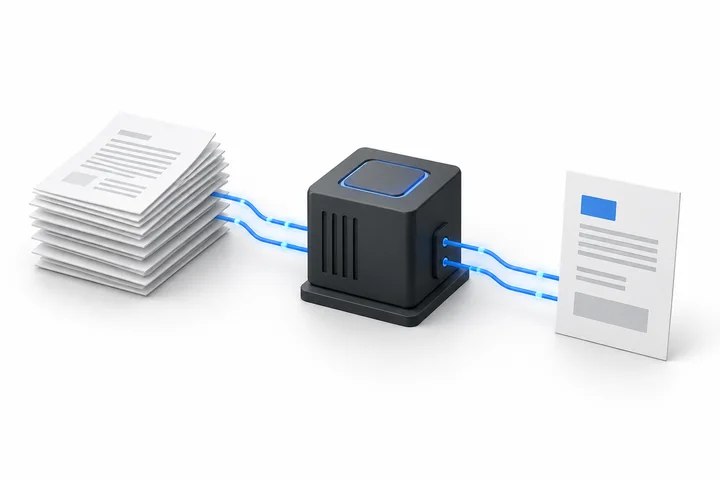
RAG for engineering documents
Naive RAG splits documents into text chunks and loses drawings, tables and revisions. What structured extraction and a governed knowledge graph change.
Read the articleFurther reading
From strategy to implementation.
Focused articles on the decisions and engineering work behind production AI.
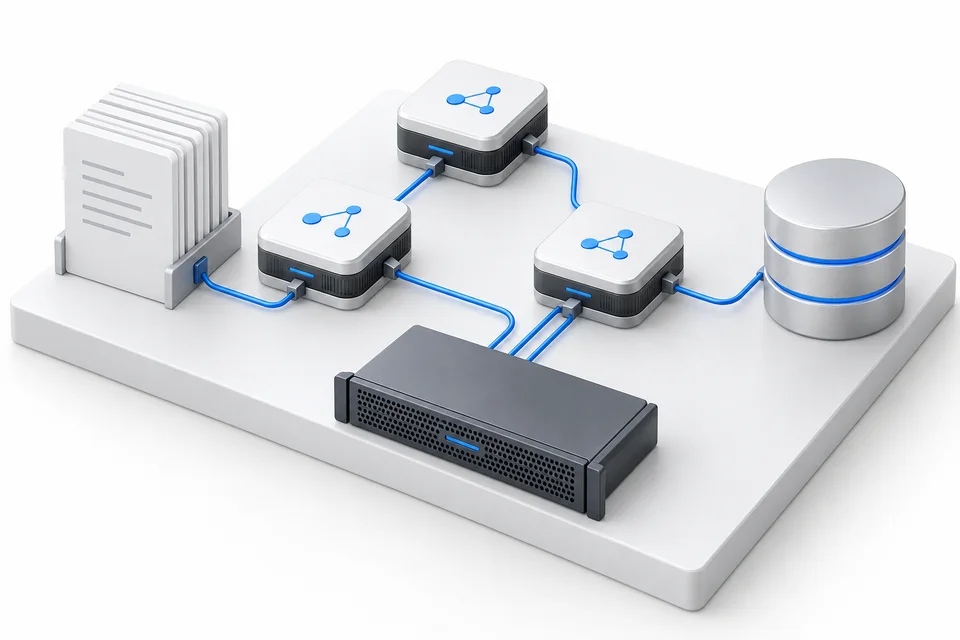
Knowledge graph or vector search?
Vector search finds similar passages; manufacturing asks about exact parts, revisions and suppliers. What each method does well and why to combine them.
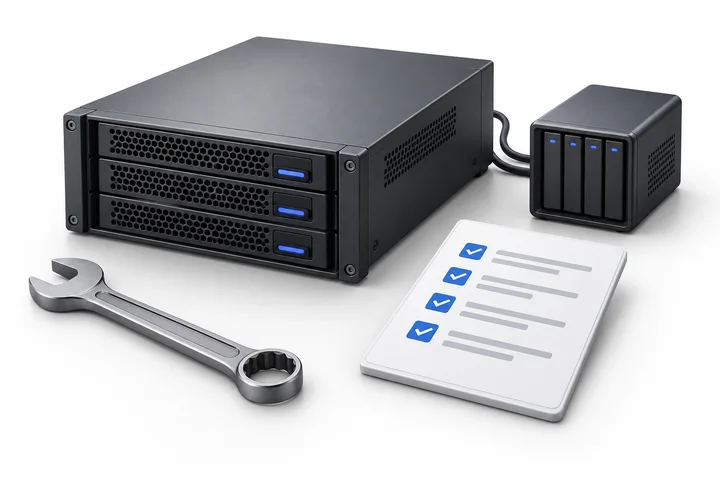
Grounding AI in quality records
Quality decisions need answers traceable to their source record. How to ground AI in nonconformances, corrective actions and inspections, with human review.
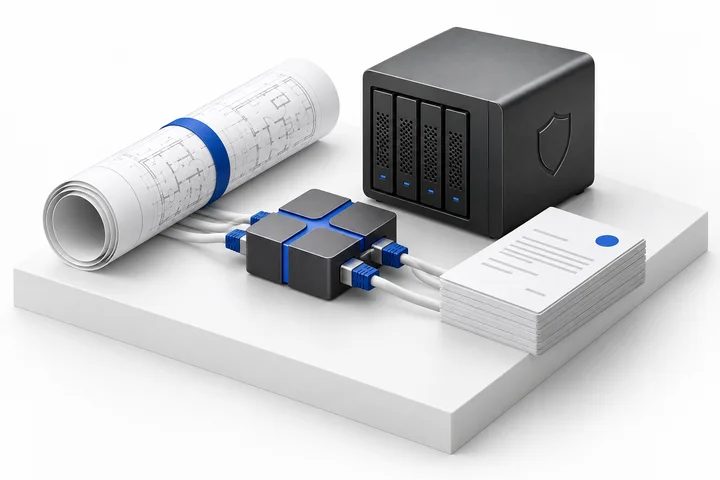
Supplier and material certificates
Extract grades, heats, test results and obligations from certificates and supplier contracts, link them to parts and suppliers, and keep the source page attached.
Private RAG inside your boundary
Run open-weight models and a knowledge graph inside your own boundary to protect industrial IP, and put permissions, evaluation and monitoring in place.
From PLM, QMS and ERP silos to one graph
Connect PLM, QMS, ERP, CMMS and document repositories into one governed knowledge graph without migration: entity resolution, lineage and permissions.

How to run an AI pilot
Most AI pilots die because nobody wrote down what success meant. How to pick the workflow, set the threshold before you start, and end with a go or no-go you would defend.

Embedded engineering for SMBs
The forward deployed engineer was invented for enterprise buyers, but the economics of the role favor owner-led companies: shorter decision loops, a stack one engineer can hold, and a handover your team can actually absorb. When to hire one, and the questions that keep the purchase honest.

Five dimensions of AI adoption
Becoming AI-native is an operating-model change across leadership, data and tooling, workflows, skills, and governance. How to score each one and what moves you up a tier.

AI use cases in real estate
Six AI use cases that hold up in a real-estate business, why near-universal adoption still produces no measurable impact for half the market, and what each one needs to survive production.
The forward-deployed engineer
A forward deployed engineer builds inside your stack, not beside it. What the role means for the person buying it, how it differs from a consultant or staff augmentation, and the one question that tells them apart.
RAG for business knowledge
Retrieval-augmented generation grounds AI answers in your data. What RAG is, when it beats fine-tuning or a plain prompt, and what separates a knowledge assistant you can trust from a demo.
Where AI agents belong
Agents are powerful and easy to get wrong. When a task genuinely needs an agent, when a plain workflow is the better answer, and how to keep an agent safe and affordable in production.

Building an AI-native organization
An AI-native organisation is built around AI from the start, not bolted onto old processes. What that means, what it is not, and what it changes for the business.

Build your team's AI capability
AI training for teams done well: assess readiness, map roles to real use cases, set one standard, run hands-on sessions, govern usage, and measure the before and after.

AI training by role
Why role-based AI training for employees beats one generic course. What good looks like for leadership, operations, sales, HR, support, and engineering, with a measured baseline.

Preparing teams for the EU AI Act
The EU AI Act now expects AI literacy across your team. What EU AI Act training must cover, what the risk tiers mean in practice, who needs what, and the compliance timeline.

AI governance in practice
Most AI governance dies as a PDF. What real AI governance training covers: acceptable use, data boundaries, approval gates, tool inventory, and keeping it alive as practice.
AI in business operations
AI is moving from demo to production inside operating businesses. What changes, and what to refuse, when intelligence becomes a load-bearing part of the stack.
Assessing AI readiness
A practical AI readiness self-assessment across six dimensions, with honest signals for low, medium, and high, and a clear next move for every weak score.

Custom AI or off-the-shelf?
The build-versus-buy call for AI is not the same as for software. Five questions that decide whether a custom workflow pays back, or whether the SaaS is the right answer.
Generative AI skills for business
Most generative AI training for business is prompt tricks that age badly. Durable training teaches judgment: how the models fail, how to evaluate output, and where AI fits.
Evaluating the value of AI
A defensible framework for measuring AI return on investment: the baseline, the four metrics that count, and the failure modes that quietly destroy the business case.
AI skills for managers
AI training for non-technical teams is about judgment, not code. How managers build literacy, set guardrails, coach the change, judge vendor claims, and lead adoption.

From pilot to production AI
The pilot worked on the founder's laptop. Production breaks differently. What the seven steps between a working demo and a deployed feature actually look like.
Prompt engineering for teams
Prompt engineering is a repeatable craft, not magic words. What prompt engineering training for teams should deliver: shared patterns, a prompt library, evals, and review.
Understanding LLM security risks
Prompt injection, data leakage, model denial of service: the ten LLM risks every CEO running AI needs to understand, in plain language, with the cost of getting each one wrong.
From AI training to adoption
Most AI pilots stall before production. Why AI adoption is a people and operations problem, and the discipline (evals, monitoring, ownership) needed to run AI day to day.
AI for sales operations
Lead scoring, follow-up sequences, call summaries, forecast hygiene: what AI actually moves inside a sales operation, what it does not, and the failure modes RevOps leaders see.

Prioritizing AI use cases
A concrete AI use case prioritization method: source candidates from real pain, score value, feasibility, and risk, build a matrix, and pick a first use case that pays back.
Modern software engineering
Past the framework debates: how a senior team ships a web platform or mobile app that survives the second year, and where AI now changes the engineering itself.
AI and cybersecurity
AI accelerates phishing, credential stuffing, and recon, and it accelerates detection, hardening, and triage. The discipline did not get easier; it got faster on both sides.
Building a dependable data foundation
Every AI feature that holds up in production sits on top of a data layer you can defend. What it takes to build that layer, and how AI is reshaping the work itself.
Cloud infrastructure, deliberately
Inference workloads, GPU spend, and data-residency rules are rewriting the cloud playbook. How to design infrastructure that holds up under AI-shaped load.

From code to dependable operations
AI features change deploy cadence, observability needs, and incident response. The DevOps that supported a CRUD app does not survive a model-served endpoint.
Design for the work people do
Generative interfaces, probabilistic outputs, and agentic flows break parts of the UX playbook. The patterns that hold, and the ones we are quietly retiring.
Connected devices. Useful data.
Small models now run on cheap silicon, in the field, with no round-trip. What that unlocks for industrial, retail, and logistics operations, and the new failure modes.