DevOps in 2026 is a discipline with a peculiar status. Almost every engineering team claims to do it. A much smaller number actually have the operational properties the term originally promised: short lead times, low change-failure rate, fast recovery from incidents, and a culture where deployment is not a quarterly event.
The gap between the two has widened with the arrival of AI-using products. The deployment cadence that supported a CRUD application breaks down when the product has a model-served endpoint that can drift, degrade, or get rate-limited by an upstream provider. The DevOps that worked is no longer enough.
This article is about what the operational layer actually has to deliver for products that ship AI features, and how AI itself changes the DevOps work.
Why this matters now
Two factors stretched the operational layer at once
Cadence and surface area both grew. The DevOps that was sufficient stopped being so.
The first factor is cadence. AI-assisted engineering compressed the time between writing a change and being ready to ship it. Teams that took a week to land a non-trivial change now land it in a day. The pipeline that gated the slower cadence becomes the bottleneck for the new one.
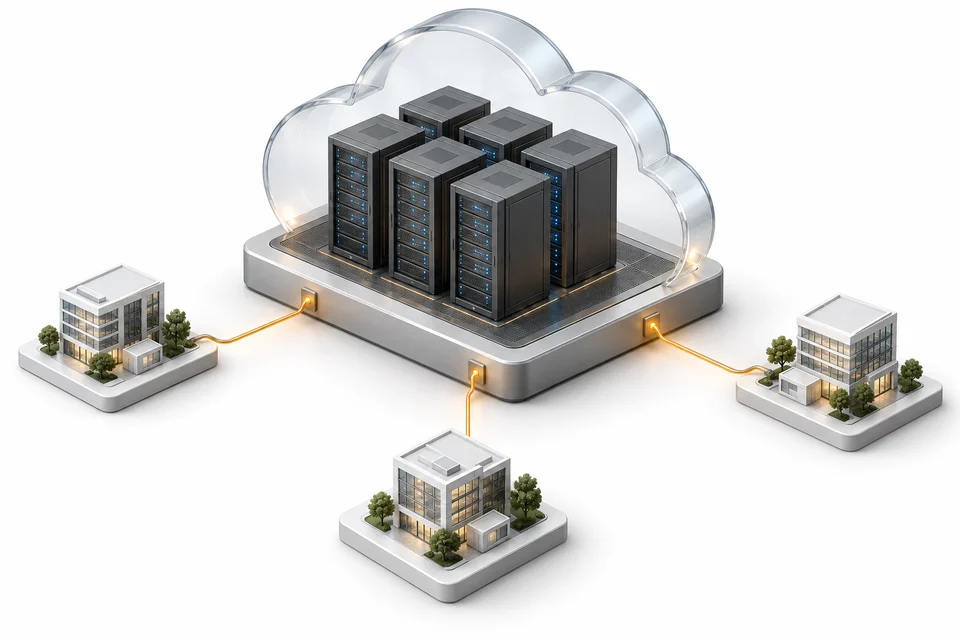
The second factor is surface area. AI features add upstream dependencies (model providers, retrieval systems, vector stores, evaluation harnesses) that did not exist in a classical web application. Each of them can fail in ways the rest of the application has to handle gracefully. The operational layer has to know about all of them.
Together, these two factors pushed DevOps from a back-office discipline back into the centre of engineering. Teams that did not invest accordingly produce more outages with worse blast radius. Teams that did, ship more, faster, with calmer incident response.
What the discipline actually covers
Pipelines, infrastructure-as-code, observability, response
At sDEN, the operational layer is built around four practices. Pipelines: every change builds, tests, and deploys through the same machinery, with no manual steps that depend on someone's laptop. Infrastructure as code: every environment is reproducible from the repository, including the secret structure (not the secret values). Observability: metrics, logs, and traces from every component, with dashboards owned by the team that owns the component. Incident response: written runbooks, an on-call rotation that is humane, and post-incident reviews that produce actual changes.
These four are the floor. They are also where most stalled engagements turn out to have gaps, usually in observability and incident response, because pipelines and IaC are visible while the other two only become visible during outages.
What the AI shape demands
Operational properties an AI product cannot ship without
A product that depends on a model in production needs operational properties a classical web product can skip. Provider redundancy: at least two model providers wired through a thin abstraction, with the ability to fail over in seconds. Output evaluation in production: a sampled, automated check that the model is still producing acceptable output, with alerts when quality drifts. Cost circuit breakers: hard limits that throttle or disable AI features when the bill is heading in a direction the business has not agreed to. And rollback that includes the prompt: not just code, but the prompt, the retrieval index, and the evaluation suite, all versioned together.
None of this is exotic. It is the operational discipline equivalent of using a seatbelt. The cost of skipping it is the kind of incident that becomes a post-mortem nobody wants to write.
How sDEN ships DevOps
Three defaults that decide whether a team can ship calmly
These are the practices we install on every engagement. They are not negotiable: skipping them produces the incidents we then have to clean up.
Within this scope
One pipeline, no manual steps
Every change goes through the same pipeline: build, test, security check, deploy. There is no manual step that depends on a specific engineer's laptop, account, or memory.
Within this scope
Observability owned by the team
Dashboards, alerts, and runbooks are owned by the team that owns the code. Observability is not a separate function; it is part of the engineering work.
Within this scope
Humane on-call
On-call rotations are sized so that an engineer is not on call for more than one week in five. Pages are sized so that an on-call engineer can sleep. If the system cannot deliver this, the system is fixed, not the rotation.
What good looks like
A team that ships every day and sleeps every night
Operational maturity is felt as boredom, and boredom, in this discipline, is the goal.
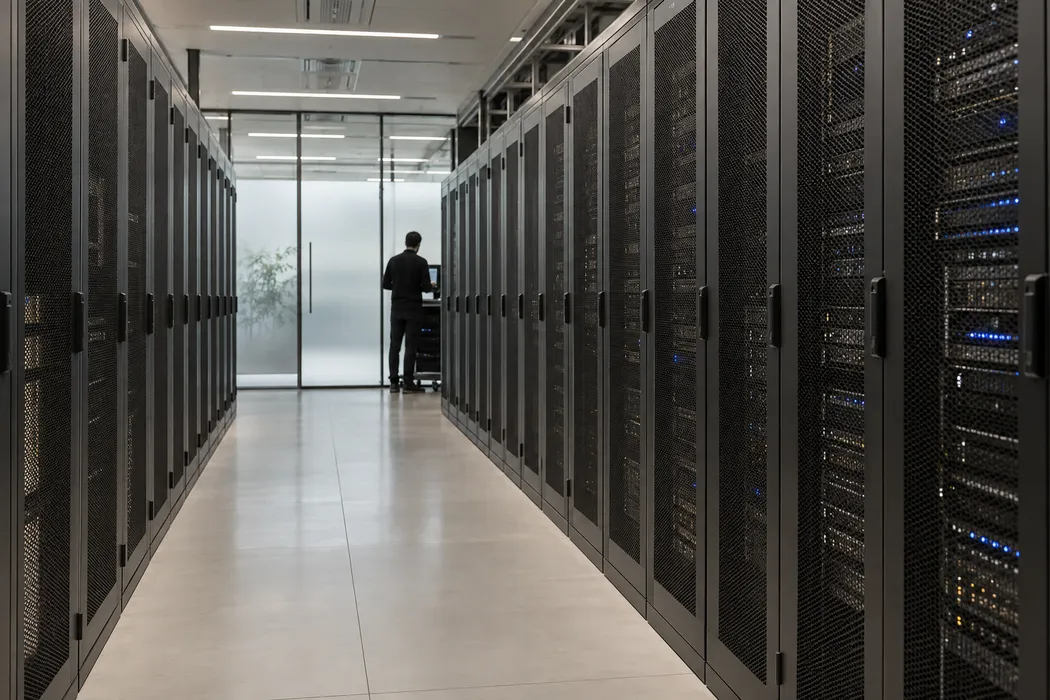
A mature operational layer changes the rhythm of the engineering team. Deployments are not events. Incidents are rare, contained, and produce learning instead of trauma. The on-call engineer goes a week without being paged. The team ships small changes constantly, because small changes are safe and large changes are not.
When this is working, it is invisible. The honest test is what the engineers say about the on-call rotation. If they describe it as humane, the operational layer is healthy. If they describe it as anything else, there is work to do.
When sDEN finishes a DevOps engagement, the deliverable is not a Kubernetes manifest. It is a team that can run the system without us, and that wants to.
Questions
DevOps & Automation, answered.
What does sDEN actually install during a DevOps engagement?
It depends on what is missing. The audit usually shows gaps in two of the four practices: pipelines and IaC, observability, incident response. We close the gaps in priority order, with the team's engineers, so that they own the result. We do not install tooling and walk away.
Do you ship on every cloud or just one?
Every major cloud, across US, Canadian, and EU regions. The DevOps practices are portable; the specific tools change. We have shipped equivalent operational layers on AWS, GCP, Azure, and on-premise Kubernetes.
How do you handle secrets?
In a dedicated secret manager (Vault, AWS Secrets Manager, GCP Secret Manager) with strict access controls, audit logs, and automatic rotation where the provider allows. Secrets do not live in environment variables in the repository, in shared password managers, or in someone's terminal history.
What metrics do you target for ship cadence and reliability?
For most engagements, the targets are inspired by the DORA framework: lead time under one day, deployment frequency at least daily, change failure rate under 15%, recovery time under one hour. These targets are translated into the team's specific context. They are not blindly applied.
How do you handle on-call during the engagement?
sDEN can be on the rotation during the engagement to absorb load while the client's team learns the new system. The rotation transfers fully to the client by the end of the engagement. We do not run as a permanent operational backstop unless the contract explicitly says so.