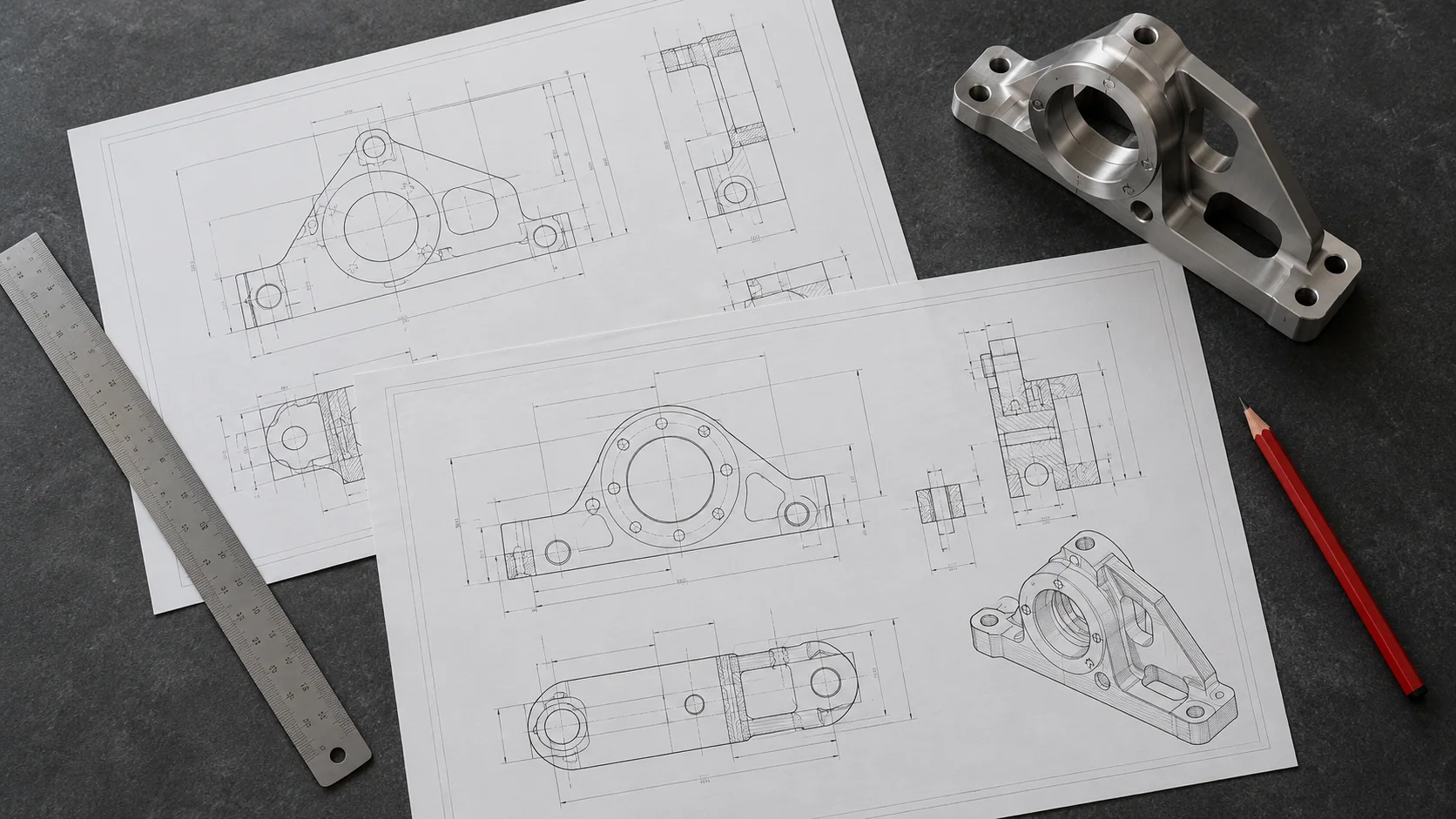
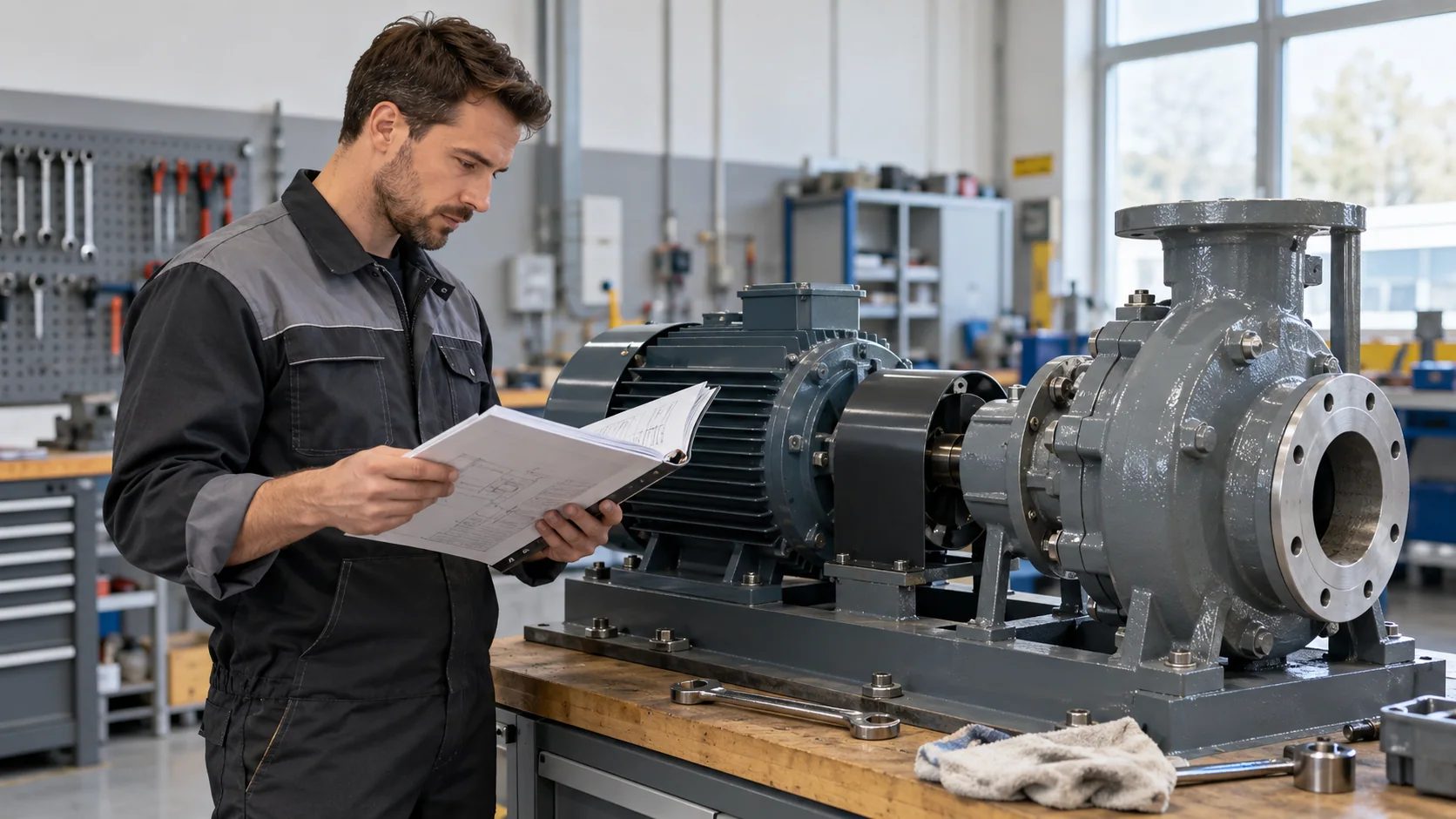
A maintenance team can have years of service reports and still struggle to answer an ordinary question: what happened the last time this equipment behaved this way? Useful details may be in a technician's report, a supplier manual, an inspection attachment or a project archive. Searching each source separately leaves the person doing the repair responsible for reconstructing the history under time pressure.
The goal is to preserve that history in a form another person can inspect. A search assistant becomes useful when it connects evidence to the right asset and configuration. It becomes dangerous when a fluent answer hides the fact that the retrieved procedure concerns a different model, an obsolete manual or a modification that was never applied to this machine.
Step 1
Make the asset the organizing reference
Choose a manageable equipment family and identify its authoritative asset register. List the identifiers actually used in maintenance records, drawings and supplier documents. The equipment tag on a work order may differ from the supplier model number or the project designation. Record those relationships explicitly instead of expecting a text search to infer that every similar label refers to the same physical asset.
Separate a generic model manual from asset-specific records. Commissioning documents, modifications and service history explain how an installed machine differs from the original specification. Keep dates, configuration references and document status alongside the content. If a report cannot be assigned confidently to an asset, put it into a review queue. A small, trustworthy collection is more useful than a large index with hidden identity mistakes.
Step 2
Preserve observations without inventing causes
Maintenance reports mix facts, hypotheses and actions. A technician may record a vibration, suspect a bearing and replace a component during the same visit. Those statements should remain distinct. Extracting them into separate fields makes it possible to search for comparable observations without treating an unconfirmed hypothesis as the established cause of every later incident. Preserve the original wording when interpretation is uncertain.
Link each extracted field to its document and location, and retain who reviewed it. Provenance is particularly important when a summary combines several visits. A reader should be able to distinguish a direct observation from a later interpretation and see which record supports each. The W3C provenance framework describes these relationships in general terms; the maintenance workflow must decide which records and review steps are required locally.
Step 3
Evaluate the questions technicians actually ask
Build the first evaluation around real retrieval tasks: locate the relevant manual revision, find prior work on an asset or retrieve the report supporting a particular measurement. Ask experienced technicians to judge whether the evidence is useful and applicable. Include incomplete reports, renamed equipment and contradictory entries. Also test questions whose answers are absent, because an assistant should disclose an information gap instead of proposing a confident reconstruction.
Keep the operational boundary clear. Retrieval is not authorization to change a procedure, restart equipment or bypass a safety instruction. Show the governing document and let the established maintenance process determine the action. When a technician corrects an asset match or classification, preserve that correction and its source. This turns ordinary review into a controlled improvement of the shared knowledge base rather than an undocumented conversation with a model.
How sDEN approaches it
Connected knowledge. Inspectable evidence.
Apply these principles to a defined collection and a practical decision.
Within this scope
Join records across repositories
sDEN Foundation connects the systems and documents where operational knowledge lives. Equipment references and relationships provide context for search without requiring teams to replace their repositories.
Within this scope
Extract usable records
sDEN Solutions can structure information from reports, tables and complex documents into customer-defined fields, retaining the connection to source documents and applying review where quality demands it.
Within this scope
Keep models inside the boundary
Private AI uses governed context within an environment the organization controls. Existing access rules remain part of the knowledge design rather than an assumption about who will ask questions.
A useful first delivery
What your team should be able to use
A good first delivery lets a technician find the relevant evidence and understand its limits. Measure whether the correct asset, document version and source location are returned, and how much checking the result requires. Broader automation can follow only after those basics work. The immediate value is a more durable record of operational experience that survives staff changes and remains useful beyond a single assistant.
Questions
Manufacturing knowledge, answered.
Is this predictive maintenance?
Not by itself. Connecting documents and service history improves access to evidence. Predicting failures requires a separately defined approach, suitable operational data and evaluation against the specific equipment and decisions involved.
Must we migrate the maintenance system?
No. The existing system remains the operational record. The knowledge layer connects relevant references and documents so authorized users can find supporting information across sources.
Sources